
How Do You Know If Your Quality Management System Is Working?
Imagine opening your Quality Manual and finding every procedure in place. Training records are being maintained, checklists are completed. Everything appears to be under control.
Then take a closer look.
Customer complaints are increasing Internal Audit findings keep returning Corrective Actions remain open for months and decisions made during management reviews are not being
What is monitoring and measurement in QMS?
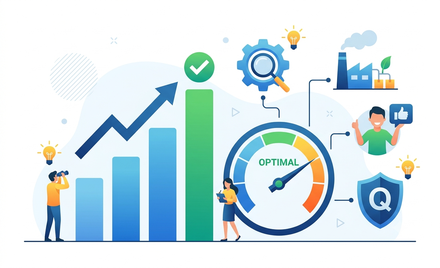
Monitoring and measurement are parts of making sure your quality processes work the way they should. Monitoring lets an organization watch what is happening, track activities. Spot any changes or new issues early. Measurement means looking at performance and seeing how well it matches goals, targets or other useful signals. Both help ensure that things stay on track and improvements can be made when needed.
ISO 13485:2016 talks about these activities in Clause 8 which's, about monitoring and measurement and it covers feedback, complaint handling, internal audits, process monitoring and product monitoring and measurement.
Here is what that looks like in practice:
-
Customer Feedback and Complaints: Customer Feedback can reveal problems that may not be visible in internal records. For instance, customers may repeatedly report delayed responses, incorrect order information, or difficulties obtaining support. So, reviewing feedback and complaint records can help identify recurring concerns and determine whether further investigation or corrective action is necessary.
-
Internal Quality Audits (IQA) are not about making sure documents exist. They are about checking if the quality system is really working the way it should. When an IQA auditor finds that supplier evaluation records are missing it shows a gap in the process. The organization can then take action by completing the missing paperwork. Once that is done the issue can be closed.. The real goal is not just to fix the paperwork. It’s to make sure the system stays strong and reliable, over time.
-
:Data Analysis:: It is a process where data is checked carefully to find patterns, repeated issues and places that could be better. Data analysis helps make choices. If the data is wrong, not complete or understood the way it can cause the wrong thinking. So the trustworthiness of the data is important too.
-
:Corrective Action & Preventive Actions:: Closing a CAPA record does not automatically means the problem has been resolved effectively. If outdated documents continue to appear, the organization needs to question whether the actions taken were sufficient.
-
Process monitoring: The measures will depend on the activity being monitored. For example the document control process may track document reviews while the purchasing process may examine supplier evaluation completion and delivery performance. The response should match the problem. A one-off error may need a correction while a recurring failure may require investigation into the underlying cause.
-
Management Review Meeting (MRM): Management Review Meeting (MRM): The MRM gives management a chance to look at how the QMS is performing. It helps them decide which areas need focus. For example they might notice they don’t have trained staff or that corrective actions keep getting delayed. Checking on what was done before also shows whether past decisions actually worked out as expected.
Example
Imagine a medical device company notices that customers are increasingly complaining about delayed deliveries. Initially, the team handles each complaint separately. Customers receive updates and orders are eventually dispatched. However a review of complaint data over months reveals that the complaint problem keeps returning. By closing complaints the organization looks at order records, dispatch timelines, inventory data and communication between departments.
The review shows that there is a repeated delay in telling the dispatch team about confirmed order details. In response the organization puts in place a communication control. It also assigns someone to make sure order details are confirmed. Then it tracks delivery performance, over a few months.
If the delay goes down and the improvement keeps going the evidence shows the action worked. If the problem keeps happening more investigation will be needed.
How often should QMS performance be reviewed?
No single review works for every process. The organization has to design monitoring and measurement methods that fit its processes, planned activities and required standards. Some information must be checked when delays or failures could cause issues. Other data can be reviewed at intervals. What matters most is making it clear what will be monitored how the data will be analyzed, who is responsible and what actions must be taken if the results are not good.
Records of the results and actions taken should be maintained as required by the applicable QMS procedures and ISO 13485:2016 requirements.
Key Takeaway
An effective QMS cannot be judged by how many procedures appear in the Quality Manual or by the number of checklists that are completed.
It shows itself through evidence that processes are working as intended. It shows itself through evidence that problems are identified. It shows itself through evidence that appropriate actions are taken. It shows itself through evidence that improvements are checked.
Monitoring allows you to watch what is going on. Measurement lets you know how well a process is working. Data analysis enables you to spot patterns.
This is where the V Reg Solutions adds value. By supporting systematic monitoring, performance measurement, data analysis, and corrective action tracking, V-REG Solution helps organizations move beyond documentation toward a more practical, evidence-based approach to quality management.
A QMS should do more than describe how work is supposed to happen. It should provide clear evidence of how well that work is actually being performed.
Its effectiveness becomes evident when you measure performance, identify gaps, take action based on results, and verify whether those actions have achieved the desired outcomes. Because what gets monitored can be understood, what gets measured can be evaluated, and what gets acted upon can improve.
Share this blog
Read More Blogs

SAHPRA Medical Device Registration: Step-by-Step Guide

CAPA in Medical Devices: Fix the Problem, Not Just the Symptom.