


PFAS in Medical Devices: Environmental Regulations, Sustainability & Compliance Guide

The things that are helping to save lives today could become a problem tomorrow?
For a time, the medical industry has been focused on making patients safer and coming up with new ideas for healthcare. Medical devices rely heavily on materials that are precise, strong and reliable like tools for surgery and implants that can save lives.
In years people have started talking about something else in the healthcare manufacturing business; being sustainable. The talk is about a group of chemicals called PFAS. These PFAS chemicals are facing scrutiny from regulatory groups across the United States.
PFAS or Per- and Polyfluoroalkyl Substances are man-made chemicals: They have been around for decades because they can handle heat, water, oil, grease and lots of chemicals. These chemicals are useful in products, like medical devices because of their special properties. PFAS are called forever chemicals because PFAS take a really long time to break down in the environment. They help make medical products work better and last longer. Scientists, regulators and public health authorities are getting more worried about PFAS being in the environment for so long. The presence of PFAS in the environment is raising concerns. PFAS play a role in many medical products but their impact on the environment is a growing issue. This has led to increased scrutiny of PFAS and their use in devices.
Some states like California, Maine, Oregon, and Colorado are making laws that target waste from packaging being responsible for the environment and being transparent about chemicals. Companies that make devices are faced with a dilemma; how can they balance coming up with ideas keeping patients safe following the law and being responsible for the environment?
Why are PFAS found everywhere?
PFAS (Pre- and Polyfluoroalkyl Substances) are a group of man-made chemicals that can resist heat, moisture, oil, stains and most chemicals.
These properties are very useful in manufacturing because materials with PFAS can withstand conditions, resist corrosion, reduce friction and stay stable for a time. PFAS became so common in healthcare applications over the decade. Companies that make medical devices often use materials with PFAS because these medical devices have to work in environments where even small failures could put patients in danger. One of the PFAS in healthcare is PTFE (polytetrafluoroethylene), also known as Teflon.
Medical device companies use materials with PFAS in them because these devices have to work well in hospitals and clinics. If medical devices do not work properly, it can harm patients. One of the PFAS materials used in healthcare is PTFE, also known as Teflon. PTFE is used in devices; these devices must work correctly to help patients. Healthcare relies on PTFE or Teflon for some tools. Patients’ health can be, at risk if these tools fail.
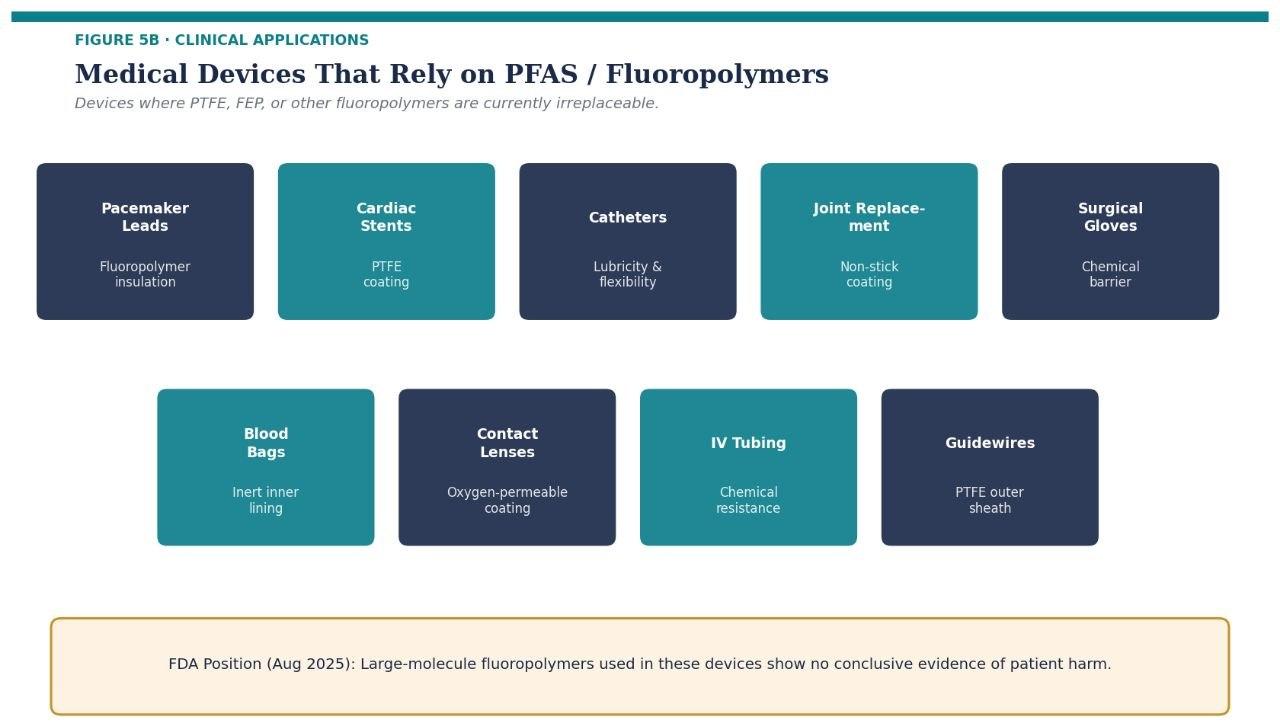
They use PTFE in things like catheters and guidewires and vascular grafts. This is because PTFE is very slippery and can withstand a lot of chemicals.
Other PFAS materials that are used a lot include FEP (Fluorinated Ethylene Propylene). They use FEP in tubes and wires that are used in equipment. They also use PFA in systems that handle fluids and in laboratory equipment. They use ETFE (Ethylene Tetrafluoroethylene) as a cover for medical cables and electronic parts. These PFAS materials like PTFE and FEP and PFA and ETFE are important, for devices.
Polytetrafluoroethylene or PTFE is really useful in devices. This is because PTFE is safe for the body, it does not react with things and it is stable when it is hot. PTFE also has a surface that does not catch on things, and it is a good insulator for electricity. These things about PTFE make it work well in hospitals and other places where medical things are used. It is very hard to find something that is as good as PTFE for these medical devices.
It can withstand clinical conditions. These characteristics make it very hard to final an alternative to PFAS in some healthcare applications.
PFAS are commonly found in devices such as:
- Catheters and guidewires
- Instruments or endoscopy
- Insulation for equipment
- Mesh materials for implantable devices
- Mesh materials for surgical instruments
- Tubing systems made of PTFE
- Seals, gaskets and valve parts
- Devices for delivering drugs
- Products for wound care that are waterproof devices
- Systems for packaging that create a sterile barrier
- Some parts of respiratory devices
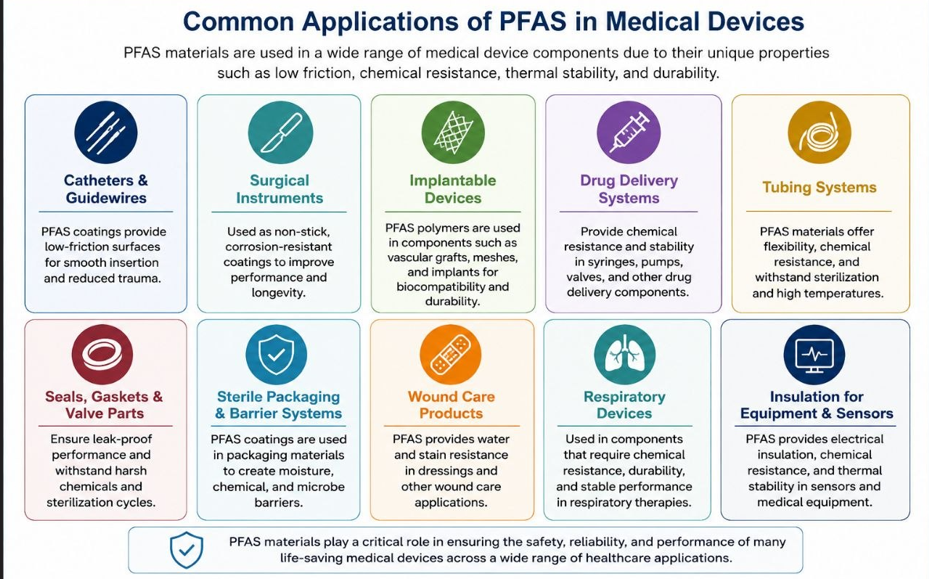
People use PFAS for reasons. They are available, which is nice. The main reason is that PFAS are really good at making things work better. They help things slide easily. There is not a lot of friction. They also keep things clean and prevent contamination. This is very important when you need to keep something. For example, think about catheters. The coating on them is very smooth. This smooth coating is also frictionless. When a doctor puts a catheter in someone it is not very painful. The catheter has a coating and this really helps. It helps reduce tissue trauma when they are put in. This is a deal because it makes the procedure easier on the patient. PFAS are used to make this coating, and that is why they are so useful. The conversation about PFAS in devices is more complicated than swapping one material for another. The problem with PFAS is not that a medical device will hurt a patient when it is used normally. The bigger problem is that PFAS can persist in the environment. PFAS are referred to as “Forever Chemicals” because they do not break down over time in the environment. Once they are released into the soil or water they can stay there for years or even decades. Being exposed to some PFAS compounds for a time has been linked to health concerns, including:
- Imbalance of Hormones
- Liver and Kidney disorders
- Thyroid problems
- Effects on Reproduction and development
- Higher level of cholesterol
- Potential link to certain cancers
Regulators around the world are being more cautious especially when it comes to “How PFAS affect the environment and how industrial waste is disposed”.
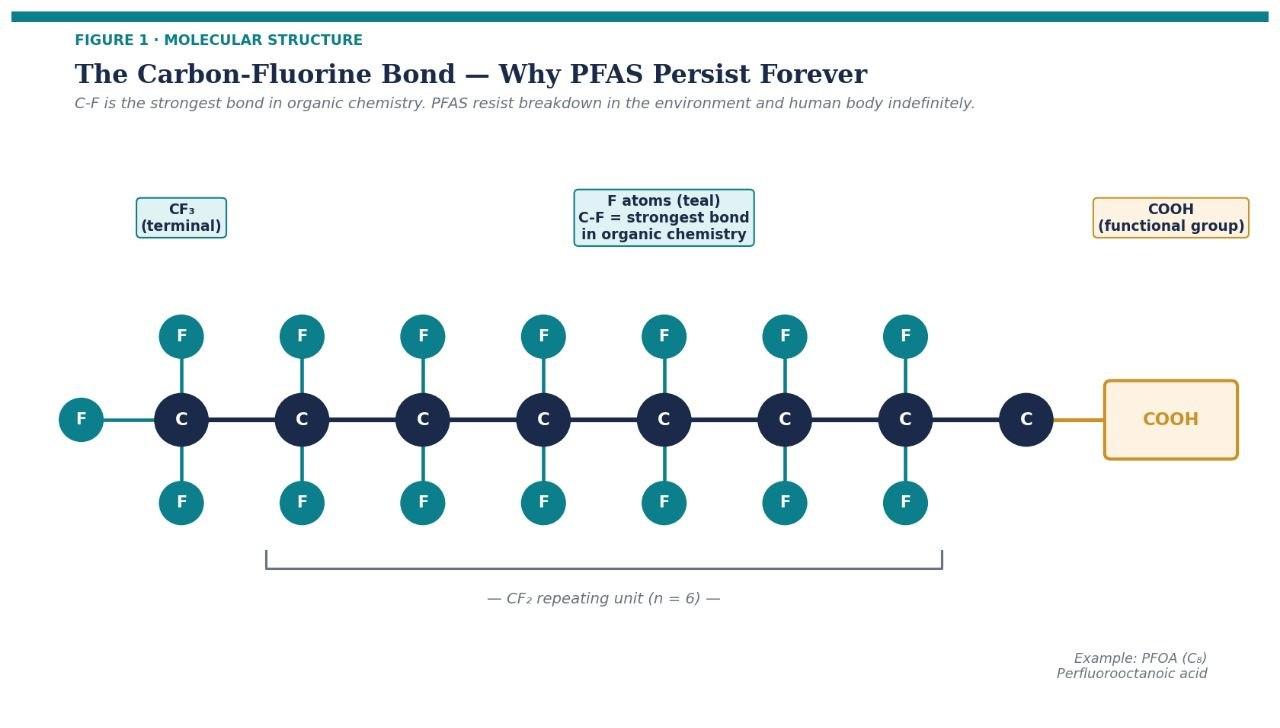
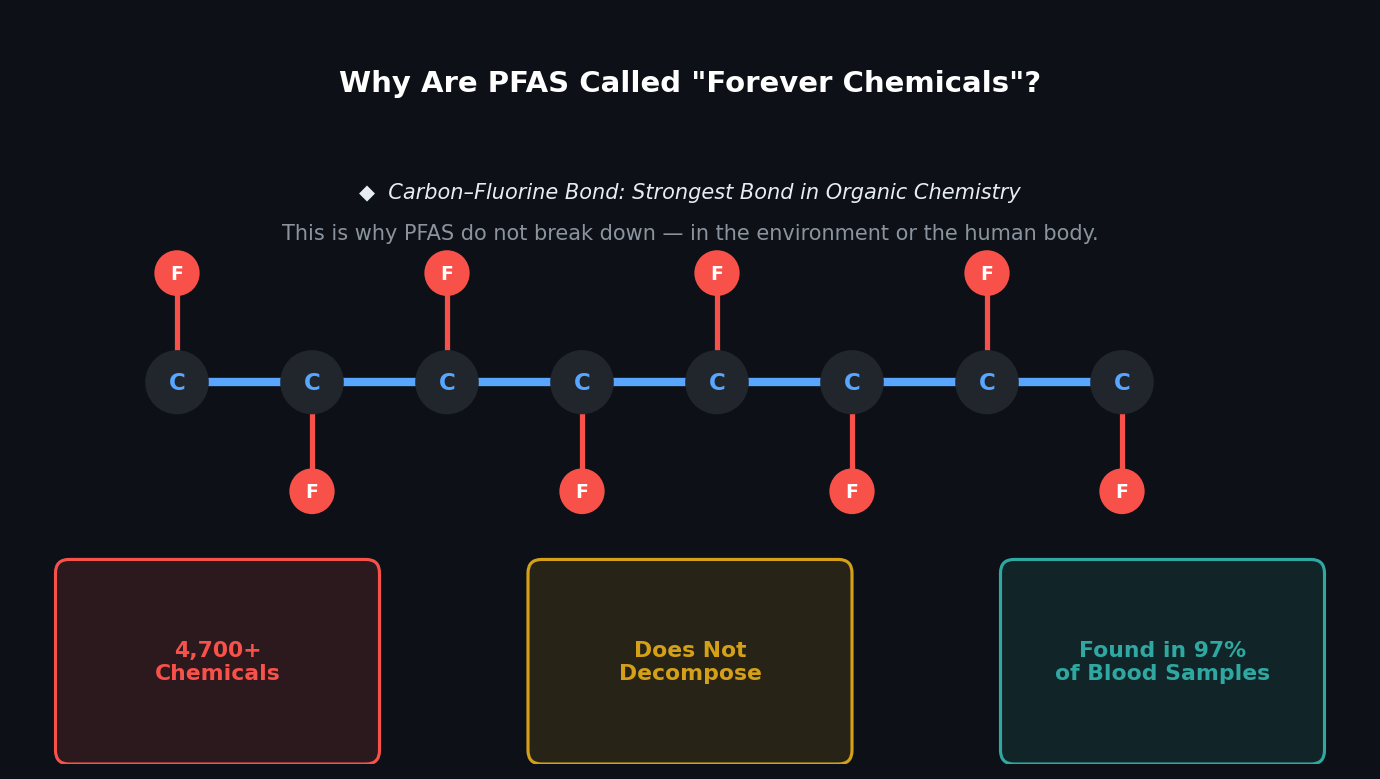
The environmental concern goes beyond the device itself.
The environmental concern goes beyond the device itself. The concerns about PFAS are not about the product that’s in a hospital. The bigger conversation about the environment includes:
- Emissions from manufacturing
- Wastewater from industry
- Challenges of incineration waste
- Waste from packaging
- Contamination of landfills
- Chemical management supply chain
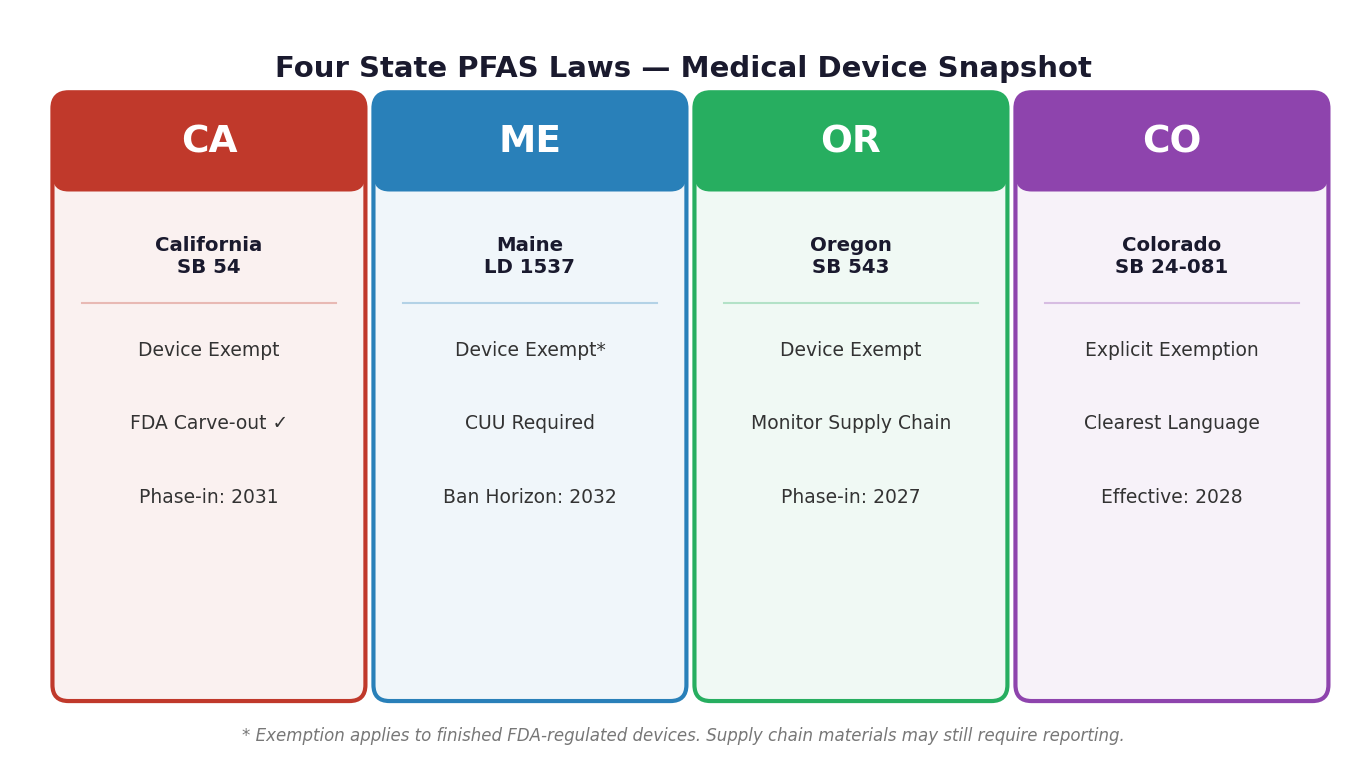
This means manufacturers are increasingly being asked to evaluate the full lifecycle of their products from raw materials and production processes to packaging and end-of-life disposal. And this is exactly where new state laws are beginning to reshape industry expectations. Let's talk about the U.S. State Laws that has been specifically drafted to protect the environment; four U.S. State Laws that have implemented these regulations are;
- California State Bill 54 (California SB 54);
- Maine Legislative Document 1541 (Maine LD 1451);
- Oregon State Bill 582 (Oregon SB 582); and
- Colorado House Bill 22-1355 (Colorado HB22-1355)
California SB 54: Packaging Waste Under the Spotlight
They have a law called California SB 54 that is looking at packaging waste. SB 54 is trying to reduce the amount of waste that comes from packaging. The objective is to guide companies toward:
- Recyclable material
- Compostable material
- Cut down on single-sue plastics
- Better waste management practices
This is a unique challenge for medical device manufacturers. Healthcare products are usually packaged using particular sterilized packaging systems to protect the patient and maintain product integrity. Medical packaging isn’t like regular consumer packaging where you can quickly redesign the packaging. There has to be extensive validation testing, stability testing and regulatory review before any changes are made to the packaging. Companies are thus motivated to consider how sustainability can be integrated into packaging design without compromising sterilization and clinical performance
Maine LD 1541: Expanding Producer Responsibility.
Maine was among the earliest states to impose major Extended Producer Responsibility (EPR) packaging guidelines. The principle of EPR is elementary but crucial: organizations that put packaging on the market should also be held accountable for the waste generated by that packaging. Maine LD 1541 may require manufacturers to help fund waste management and recycling procedures. For manufacturers, this changes the conversation entirely. Medical device companies, especially those with large distribution networks and high packaging volumes, may eventually face increased expectations around:
- Packaging material transparency
- Recyclability
- Sustainability reporting
- Supplier accountability
Oregon SB 582: A Push Toward Sustainable Material Management
Oregon's SB 582 takes a similar producer-responsibility stance but places a high priority on enhancing state-level recycling procedures and fostering greater sustainability in selection of materials. The regulation strives to establish a progressively standardized structure where manufacturing companies share the burden of the impact on the environment of packaging-related waste. This adds another layer of tactical planning for manufacturers of health care.
Medical devices are already among the strictly controlled products globally. To include environmental material assessments in the process teams like quality, research and development and supply chain must collaborate more closely than they have in the past. Regulatory teams need to ensure compliance with environmental standards while quality teams focus on the impact on product safety and performance. Research and development teams will have to innovate to meet these standards and supply chain teams will need to find eco-friendly materials and manage the logistics of sourcing them.
What once seemed like a niche sustainability discussion is now becoming part of routine compliance conversation within the industry
Colorado legislation HB22-1355: The industry paradigm shift is going national
Colorado HB22-1355 builds on a rising national norm for environmental oversight and producer responsibility. The regulation lays out a state-level infrastructure that will enhance standards for recycling and allocate additional accountability to the manufacturers and producers. Each of the state’s law separately can seem manageable. But taken in tandem, they point to something far bigger: the regulatory framework is constantly shifting.
Companies doing business in several states may eventually have to fulfil multiple environmental standards at the same time. This poses operational obstacles to manufacturers of medical devices not just from the regulatory bodies, but also resulting from:
- Investors
- Healthcare systems
- The teams of procurement
- Global distribution partners
- ESG reporting expectations
Why PFAS Replacement Is So Difficult in Medical Devices.
Unlike consumer products, medical devices cannot simply swap materials based on environmental preferences alone. Every material used in healthcare product must support:
- Patient safety
- Biocompatibility
- Sterility maintenance
- Mechanical performance
- Chemical compatibility
- Long-term stability
Even a seemingly small material change can trigger; a small alteration in the material may result in:
- Verification of design
- Biocompatibility evaluation
- Further validation and testing
- Risk management reviews
- Regulatory submissions
- Supplier requalification
For instance, an alternative of a fluoropolymer-based covering in the catheter may vary:
- Frictional performance
- Clinical usability
- Sterilization compatibility
- Device durability
That's precisely why a lot of manufacturers are taking a proactive, rather than reactive, approach to the PFAS transition.
How Medical Devices Manufacturers Are Reacting
The industry is already preparing for more rigorous standards for the environment, with several organizations already making plans to comply.
Typical methods consist of:
- Assessing stock of materials
- Tracking the occurrence of PFAS in the chain of supply
- Assessing substitute materials
- Sourcing supplier confirmations
- Enhancing reports on sustainability
- Redesigning conventional packaging frameworks
- Enhance risk to the environmental analysis
The concept of sustainability is currently not restricted to a few CST departments alone in many reputable companies. Regulatory affairs, quality assurance, product development and executive management organizations are now being influenced.
Conclusion
For decades, PFAS quietly supported innovation in modern healthcare. They helped make medical devices safer, more durable, and more effective in demanding clinical environments. But the conversation is changing.
Today, manufacturers are being asked to think beyond performance alone. They're being asked to reflect on impact on the environment, sustainability. Disposal of waste, and enduring material accountability, as well as safety for patients and creative thinking. But the journey ahead will not be facile, and one thing is getting more apparent; the upcoming years of manufacturing medical devices will be determined not just by innovations in technology, but by how ethically responsible that progress is accomplished.
Links
- https://calrecycle.ca.gov/packaging/packaging-epr/
- https://www.mainelegislature.org/legis/bills/getPDF.asp?paper=HP1146&item=1&snum=130
- https://www.oregon.gov/deq/recycling/Documents/CAAamendOPPa2.pdf
- https://leg.colorado.gov/bills/hb22-1355
- https://circularactionalliance.org/
Share this blog
Read More Blogs

How to Apply Human Factors and Usability Engineering to Medical Devices
Understanding the Latest Updates in ISO 15223:2025 for Medical Device Labelling

AI vs Regulatory Consultants: Why Human Expertise Still Matters
